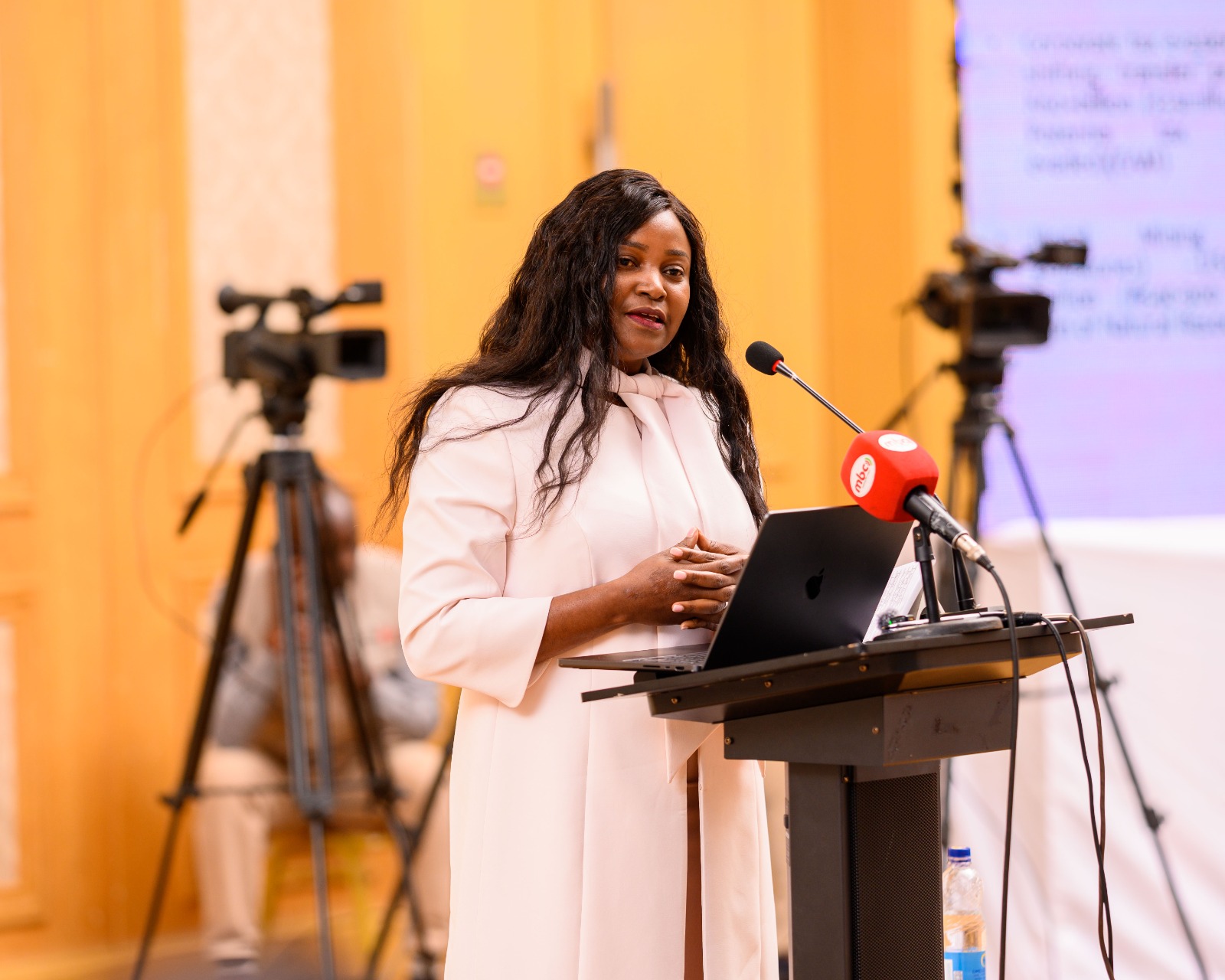
On 3rd June 2026, the Government of Malawi, through the Ministry of Finance, Economic Planning and Decentralisation, held a consultative workshop on the National Economic Recovery Plan (NERP) 2025–2030 at the Bingu International Convention Centre(BICC). The workshop was presided over by the Minister of Finance, Economic Planning and Decentralisation, Honourable Joseph Mwanamveka, MP, who served as the Guest of Honour. The Economics Association of Malawi (ECAMA) was represented by its President, Dr. Bertha Bangara Chikadza, and Economics Intern, Charity Mwenda.
During the workshop, the Director of Economic Planning, Mr Zembele presented the National Economic Recovery Plan. In his remarks, the Minister highlighted that the NERP was developed in response to the macroeconomic challenges that have affected the country over the past five years. The Plan therefore aims to restore and stabilize the economy while accelerating economic growth by addressing the structural challenges facing the country.
ECAMA appreciated the efforts the government is making to improve the country's economic situation and shared some realistic proposals that the government can adopt in implementing this initiative. ECAMA highlighted the need to diversify agricultural investments and shift to other agricultural subsectors, such as horticulture, as other countries have successfully done. The Association also recommended the establishment of 10 to 15 irrigation corridors that can be effectively monitored to enhance productivity in the agricultural sector.
Furthermore, ECAMA observed that although agriculture receives significant attention, alongside mining, other priority sectors identified under the Malawi 2063 agenda namely Tourism, Mining, and Manufacturing (ATMM) also have substantial potential to contribute to economic growth and should be equally supported to increase the country's GDP. The Association further advised that the NERP should establish an independent body to monitor and evaluate implementation progress, arguing that the same team should not be responsible for both implementation and oversight. Such an arrangement, it noted, would strengthen accountability and transparency.